Beautiful Flower Rangoli Designs for Diwali: Simple & Creative Ideas
Diwali is a festival of lights, happiness, and beautiful decorations. From lighting diyas to decorating the entrance with flowers, every little detail makes the celebration more special. One of the easiest ways to add colour and a traditional touch to your home is by creating a beautiful flower rangoli.
Flower rangoli designs for Diwali are a lovely choice for people who want to decorate their homes with fresh flowers, colourful petals, and creative patterns. You do not need expensive materials or professional skills to get started. With a few marigolds, rose petals, and some imagination, you can create an attractive rangoli for your entrance, pooja room, balcony, or living area.
In this blog, we will explore simple and creative flower rangoli ideas, the best flowers to use, and helpful tips for making your Diwali decorations look beautiful.
Complete Your Flower Rangoli with Beautiful Diwali Decorations
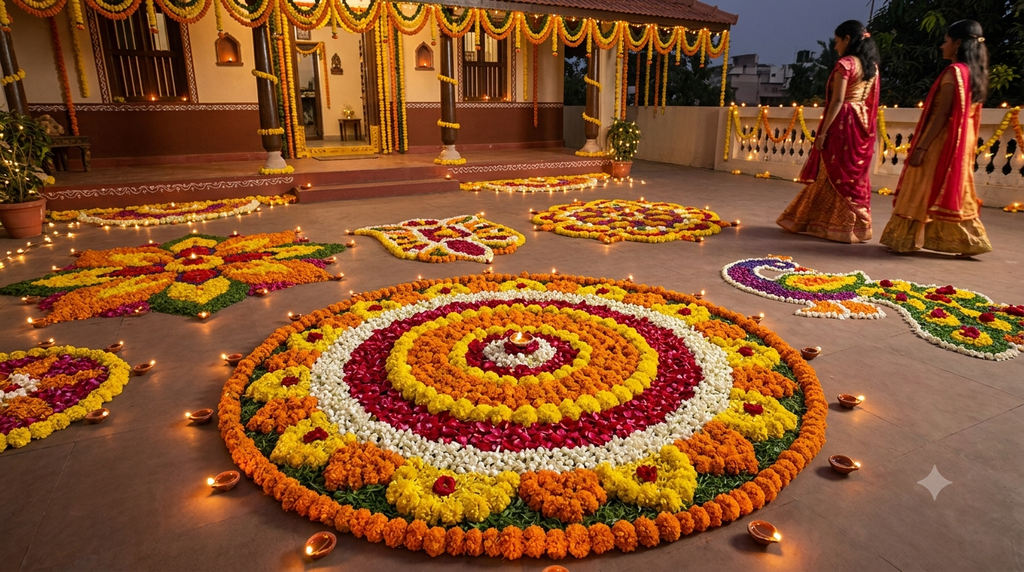
Flower rangoli designs look even more beautiful when paired with traditional Diwali decorations. You can decorate your entrance with marigold flowers, add decorative torans to your doors, and use warm fairy lights to create a festive atmosphere. Diyas and floral arrangements can also make your home feel more welcoming.
If you want to create a beautifully decorated space without arranging everything yourself, explore our Diwali decoration services in Delhi NCR. From festive home decoration ideas to attractive decorative setups, you can find inspiration for creating a memorable Diwali celebration.
Combine your favourite flower rangoli design with coordinated decorations to give your home a complete festive look.
Why Choose Flower Rangoli Designs for Diwali?
Flower rangoli adds natural beauty and a festive feeling to any space. Unlike designs made entirely with coloured powder, floral rangoli uses fresh flowers and petals to create attractive patterns.
Here are some reasons to try flower rangoli this Diwali:
- Natural colours: Fresh flowers bring bright shades of yellow, orange, red, pink, and white to your decorations.
- Traditional appeal: Floral patterns complement the traditional spirit of Diwali.
- Easy to create: Many designs are simple enough for beginners and children to make with adult supervision.
- Flexible designs: You can create small patterns for apartments or larger designs for courtyards and entrances.
- Creative decoration: Flowers can be arranged in circles, mandalas, diyas, lotus patterns, and many other shapes.
Moreover, flower rangoli looks beautiful when paired with decorative lanterns, torans, fairy lights, and diyas.
Beautiful Flower Rangoli Designs for Diwali
Looking for inspiration? Here are ten flower rangoli ideas that can help you decorate your home for the festival of lights.
Simple Round Flower Rangoli Design
A round flower rangoli is one of the easiest options for beginners. Start by making a small circle with yellow marigold petals. Next, create another circle using orange petals and add red rose petals in the centre.
You can repeat these layers until you achieve the size you want. For a neat finish, use green leaves around the outer edge.
Best for: Main entrances, small courtyards, and pooja room entrances.
Marigold Flower Rangoli Design
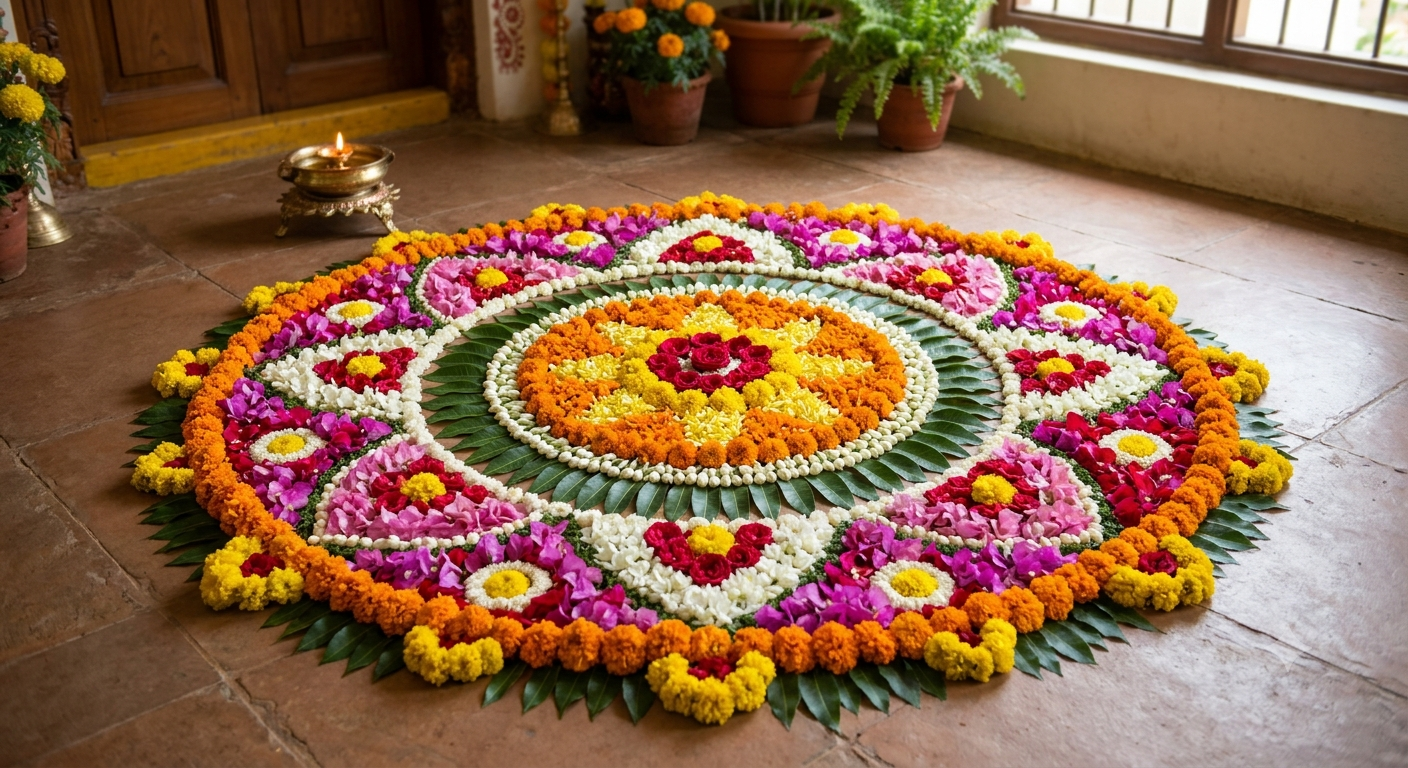
Marigolds are popular for festive decorations because their yellow and orange colours look bright and cheerful. You can use their petals to create a traditional circular rangoli or arrange them into a flower-shaped pattern.
For a more attractive appearance, alternate yellow and orange petals. Add a few rose petals in the centre to create a colourful contrast.
This simple flower rangoli design works well with traditional Diwali decorations and warm lighting.
Best for: Home entrances, doorways, and festive gathering areas.
Rose Petal Rangoli Design
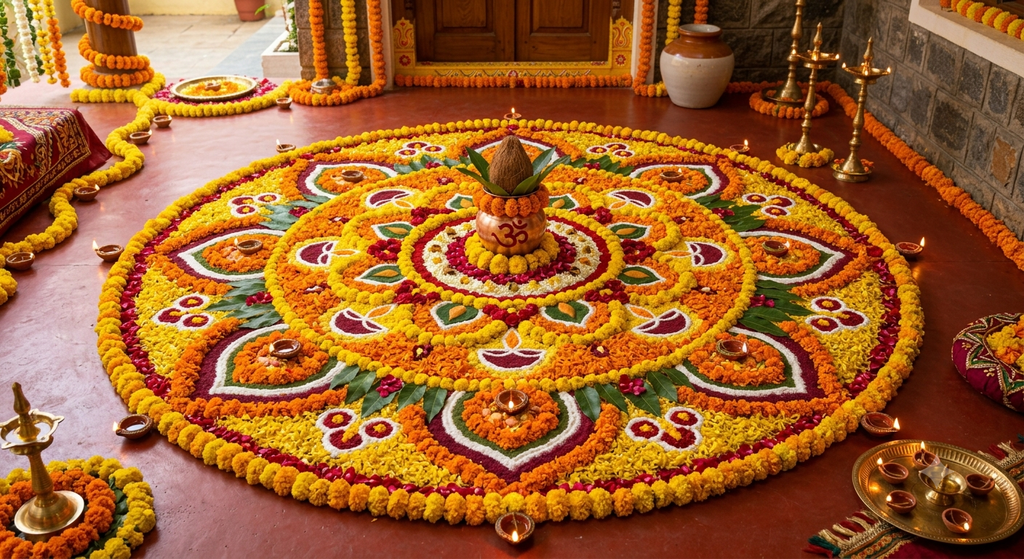
If you prefer an elegant look, try a rangoli made with rose petals. Red, pink, and white rose petals can be arranged into flower shapes, concentric circles, or decorative borders.
Begin with a small circle of white petals. Add pink petals around it, followed by a wider border of red petals. You can also use green leaves to separate the colours.
This design is a good choice when you want a soft, colourful decoration without using too many different materials.
Best for: Living rooms, pooja areas, and indoor festive corners.
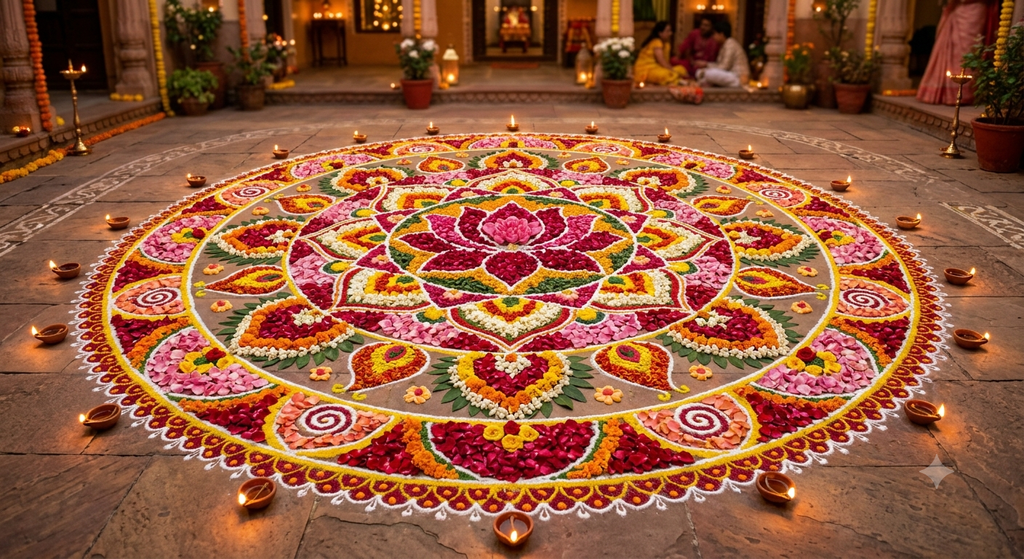
Lotus Flower Rangoli Design
The lotus is a beautiful choice for traditional Indian decorations. A lotus-inspired floral rangoli can be created using pink or red petals for the main flower and white or yellow petals for the surrounding pattern.
First, create the centre of the lotus. Then arrange the petals into pointed sections to form the flower’s outer shape. Add green leaves around the design to make it stand out.
Although a detailed lotus pattern may take some time, a simple version can be made with just two or three colours.
Best for: Pooja rooms and traditional Diwali decoration areas.
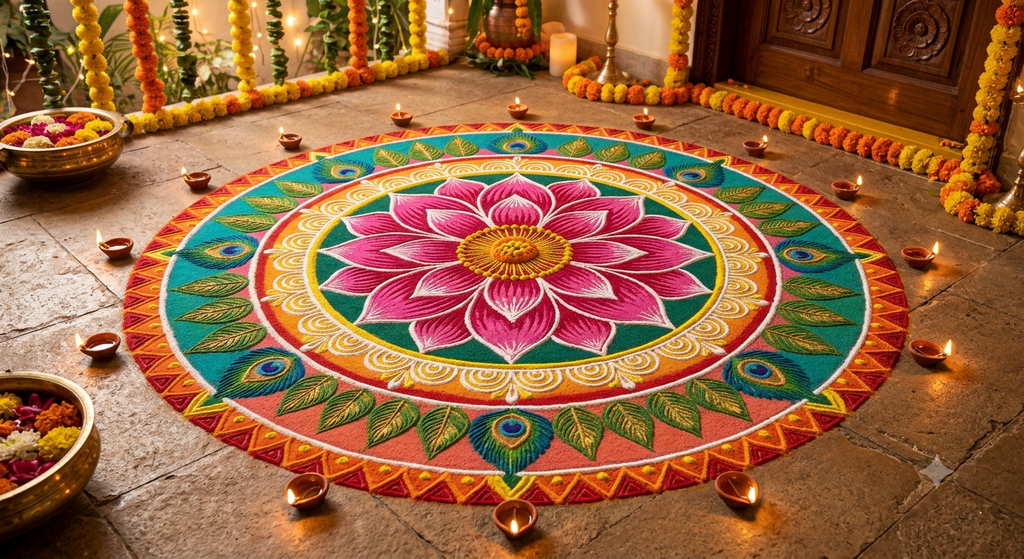
Peacock-Inspired Flower Rangoli
A peacock-inspired rangoli is ideal if you want a more creative design. Use blue, purple, green, yellow, and orange flower petals to create the body and feather-like patterns.
You can simplify the design by creating a curved body and adding small colourful circles to represent the feathers. Use leaves to form the outer border.
This design requires more planning than a basic circular rangoli, but the result can become a beautiful centrepiece for your Diwali decorations.
Best for: Large entrances, courtyards, and family celebrations.
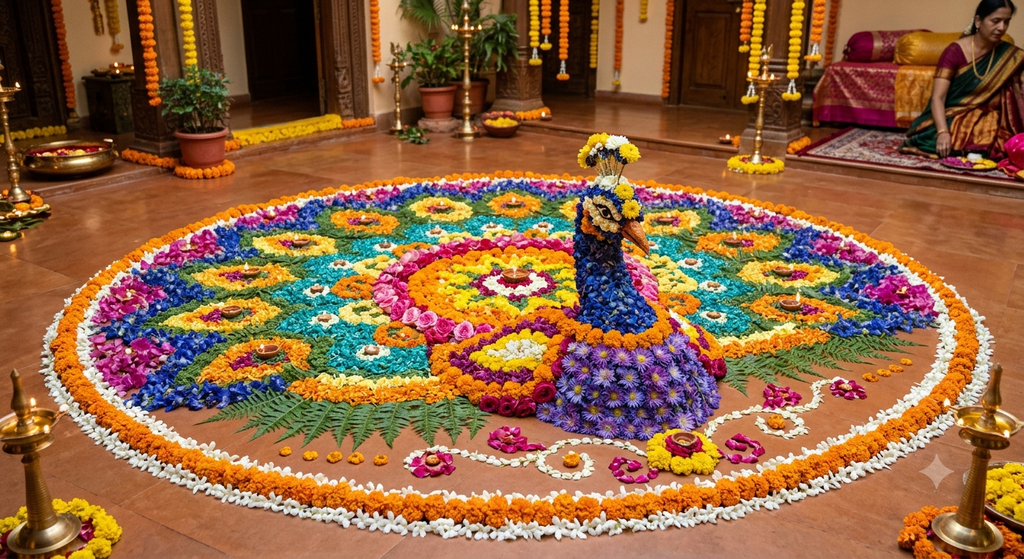
Diya-Shaped Flower Rangoli
Diya-shaped flower rangoli is a wonderful way to celebrate the festival of lights. Arrange orange and yellow petals to create the shape of a traditional oil lamp. Use red petals for the outline and yellow petals for the flame.
You can also create several small diya patterns around a central floral design. Place battery-operated LED lights nearby to complete the look.
For safety, keep real flames away from flower petals, dried leaves, and other decorations.
Best for: Main entrances, living rooms, and festive photo corners.
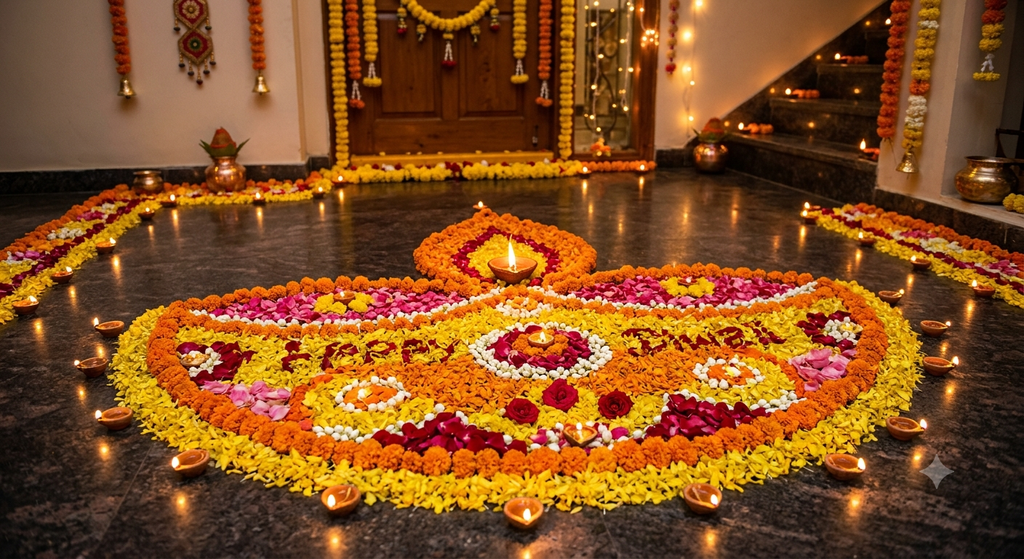
Multi-Coloured Floral Rangoli
For a bright and cheerful decoration, combine different flower petals to create a multi-coloured rangoli. Use yellow marigolds, red roses, white chrysanthemums, and green leaves to form layers of colour.
Start with a simple shape, such as a circle or a large flower. Divide the design into sections and fill each section with a different colour.
The key is to balance the colours rather than use too many shades in one small area. A clear pattern will help the rangoli look organised and attractive.
Best for: Open spaces, family gatherings, and Diwali parties.
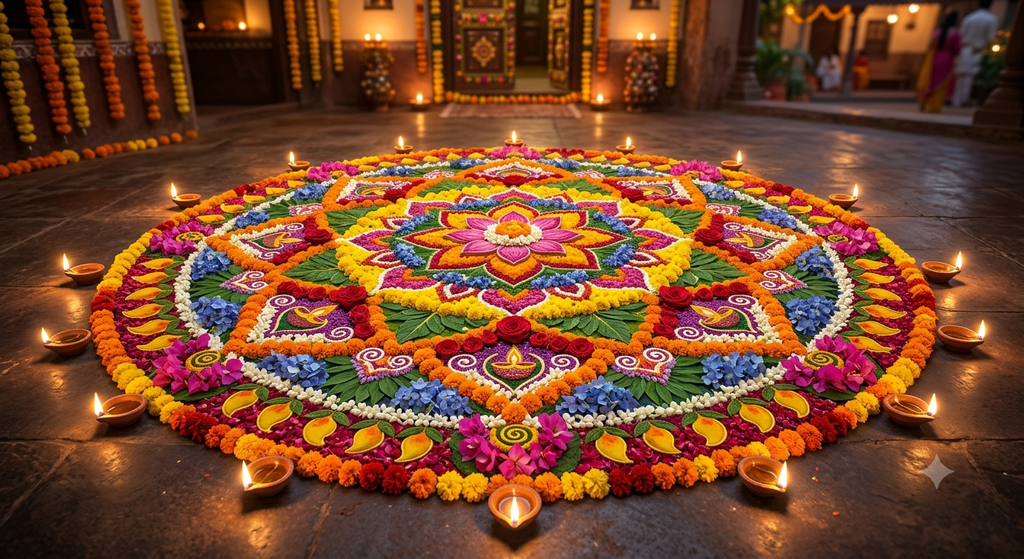
Corner Flower Rangoli Design
Not every home has enough space for a large rangoli. Fortunately, corner flower rangoli designs are a practical option for apartments and smaller rooms.
Create a quarter-circle pattern using marigold petals and rose petals. Add leaves along the curved edge and keep the centre simple.
You can place this design beside the entrance, near a decorated table, or in an empty corner of the living room. It adds a festive touch without taking up much floor space.
Best for: Small apartments, balconies, and compact entrances.
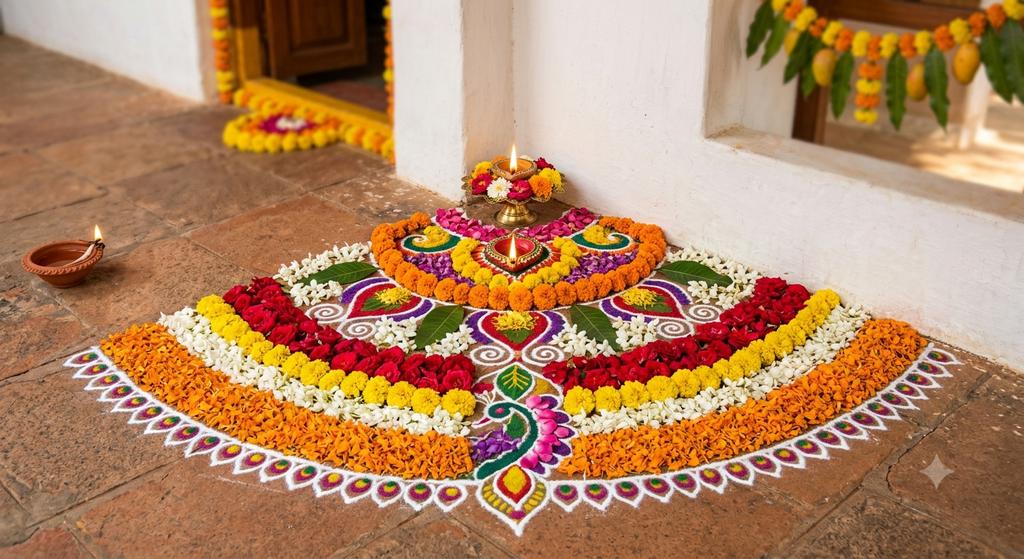
Traditional Mandala Flower Rangoli
A mandala rangoli features repeated shapes arranged around a central point. It is a great option for anyone who enjoys detailed and symmetrical patterns.
Begin with a small circle in the centre. Add petal-shaped sections around it, followed by larger rings made with contrasting flowers. Continue adding layers until the design reaches your preferred size.
Although this design may look complicated, breaking it into small sections makes it easier to create.
Best for: Large entrances, courtyards, and traditional festive settings.
Floating Flower Rangoli for Diwali
If you want something different from a floor rangoli, try a floating floral arrangement. Take a wide, shallow bowl and fill it with clean water. Gently place marigold petals, rose petals, and a few fresh flowers on the surface.
Arrange the flowers in a circular pattern or create a simple central design. You can place the bowl on a stable table near the entrance or in a decorated corner.
For a safer option around children and pets, use battery-operated floating lights instead of open flames.
Best for: Entrance tables, balconies, and indoor festive displays.
Best Flowers to Use for Diwali Rangoli
Choosing the right flowers can make your rangoli look brighter and more attractive. Here are some popular options.
Marigold Flowers
Marigolds are among the most useful flowers for Diwali rangoli. Their yellow and orange shades create a warm, traditional appearance. They also work well for borders and large circular patterns.
Rose Petals
Rose petals add colour and elegance. Red, pink, and white petals are particularly useful for floral shapes, mandalas, and decorative details.
Chrysanthemums
Chrysanthemums are available in several colours and can be used to create bold floral patterns. Their full flower heads also work well in larger arrangements.
Jasmine Flowers
Jasmine flowers add a delicate white touch to traditional decorations. Use them to create small borders or highlight selected parts of a rangoli.
Green Leaves
Although leaves are not flowers, they help create a natural contrast. Use fresh green leaves to separate different colours or outline the edges of your design.
Tip: Choose fresh flowers and prepare the rangoli close to your celebration time. This helps the colours look bright and the petals remain attractive.
How to Make a Simple Flower Rangoli at Home
You do not need special equipment to create a beautiful floral rangoli. Follow these simple steps.
- Step 1: Clean the area. Sweep the floor and make sure the surface is dry before arranging the flowers.
- Step 2: Choose your design. Beginners can start with a circle, a simple flower, or a diya shape.
- Step 3: Prepare the petals. Separate the petals by colour and keep them in small bowls for easy access.
- Step 4: Draw the outline. Use chalk to mark the basic shape if you want a more symmetrical design.
- Step 5: Arrange the flowers. Start from the centre and work outwards, adding one layer at a time.
- Step 6: Add finishing touches. Use leaves, smaller flowers, or contrasting petals to highlight the edges.
- Step 7: Decorate the surroundings. Add torans, lanterns, or LED lights to complete your festive arrangement.
Remember, a simple and tidy rangoli can look just as beautiful as a detailed design.
Creative Tips to Make Your Flower Rangoli More Beautiful
A few small changes can make your floral rangoli look more polished.
- Choose contrasting colours: Combine orange with white, red with yellow, or pink with green.
- Create clear borders: Use leaves or a single colour of petals to define the outer edge.
- Keep the design balanced: Make sure the pattern has a clear centre and evenly arranged sections.
- Match the available space: Choose a compact design for a small entrance and a larger pattern for an open courtyard.
- Add festive lighting: Use LED lights around the rangoli to create a warm evening atmosphere.
- Prepare fresh petals: Avoid wilted or damaged flowers for a neat appearance.
- Keep walkways clear: Place the design where guests can admire it without stepping on it.
Most importantly, enjoy the process. Your rangoli does not need to be perfect to make your Diwali decorations special.
Flower Rangoli Decoration Ideas for Different Spaces
You can use flower rangoli in several areas of your home or workplace.
Flower Rangoli for the Main Entrance
The main entrance is a natural place for a festive rangoli. Choose a circular marigold pattern or a colourful floral mandala. Pair it with a toran and warm LED lighting to create a welcoming appearance.
Flower Rangoli for the Pooja Room
For a pooja room, consider a lotus, round floral pattern, or simple mandala. Use colours that complement your existing decorations, and leave enough space around the rangoli for comfortable movement.
Flower Rangoli for the Balcony
A small circular or corner design can make a balcony look festive. Use a limited number of flower colours and avoid placing loose petals where they could blow away.
Flower Rangoli for the Office
Floral rangoli can also brighten an office entrance, reception area, or Diwali celebration space. Choose a clean, symmetrical design that suits the workplace and does not block foot traffic.
For larger celebrations, you can combine floral rangoli with entrance decorations, flower arrangements, and coordinated lighting.
Flower Rangoli vs Colour Rangoli: Which Is Better for Diwali?
Both flower rangoli and coloured-powder rangoli can make your home look beautiful. The right choice depends on your style and available materials.
Flower rangoli offers natural colours, a fresh appearance, and a traditional feel. It is ideal for people who enjoy working with fresh flowers and petals.
Colour rangoli offers more precise lines, a wide range of shades, and greater control over detailed patterns. It may be a better option for intricate designs that require sharp outlines.
You can also combine both methods. For example, create the main pattern with rangoli colours and highlight the borders with marigold petals or roses.
If you prefer natural decorations, choose fresh flowers and leaves. To reduce waste, consider composting suitable flower remains after the celebration.
How to Keep Your Flower Rangoli Fresh for Longer
Fresh flower rangoli can lose its appearance over time, especially in warm weather. These tips can help:
- Prepare your rangoli as close to the celebration as possible.
- Store flower petals in a cool place before use.
- Keep the arrangement away from strong sunlight and hot surfaces.
- Replace wilted petals when necessary.
- Avoid placing the rangoli where people frequently walk.
- Keep candles and diyas at a safe distance from flowers.
These simple steps can help your rangoli remain attractive throughout your Diwali gathering.
Complete Your Diwali Decorations with Beautiful Festive Ideas
Flower rangoli is a lovely starting point for decorating your home, but you can create an even more festive atmosphere by combining it with other decorations.
For example, pair a marigold rangoli with a floral toran at the entrance. Add warm fairy lights around a doorway, decorate the pooja area with fresh flowers, or use elegant lighting to highlight a festive corner.
If you are planning a larger celebration, coordinated decorations can help bring the entire space together. Celebration Management offers Diwali decoration options for homes and other spaces.
Explore our Diwali decoration services in Delhi NCR for ideas to complement your flower rangoli and create a festive setting for your celebration.
Whether you prefer a simple floral circle or an elaborate mandala, choose decorations that reflect your personal style and make your home feel welcoming.
Frequently Asked Questions About Flower Rangoli Designs for Diwali
1. Which flowers are best for Diwali rangoli?
Marigolds, roses, chrysanthemums, and jasmine are popular choices for Diwali rangoli. Marigolds provide bright yellow and orange colours, while rose petals add red, pink, and white shades. Green leaves can also help define the pattern.
2. How can I make simple flower rangoli designs for Diwali?
Start by cleaning a flat surface and drawing a basic circle or flower shape. Separate fresh petals by colour, then arrange them in layers from the centre outwards. Finish the design with leaves or contrasting petals for a neat appearance.
3. Which flower rangoli design is best for beginners?
Simple circular rangoli designs are ideal for beginners because they require fewer materials and are easy to arrange. You can use yellow and orange marigold petals, add a small rose pattern in the centre, and finish with a border of green leaves.
4. Can I make Diwali rangoli using only flower petals?
Yes, you can create beautiful Diwali rangoli using only flower petals. Choose flowers in different colours and arrange them into circles, floral patterns, or mandalas. You can also use whole flowers and leaves to add variety to your design.
5. How do I make a marigold flower rangoli?
Separate yellow and orange marigold petals into two bowls. Draw a circle on a clean floor, fill the centre with yellow petals, and create an outer ring using orange petals. Repeat the pattern if you want a larger design.
6. How long does a fresh flower rangoli last?
A fresh flower rangoli may stay attractive for several hours or longer, depending on the flower type, room temperature, sunlight, and humidity. For the best appearance, use fresh petals and prepare the rangoli close to your Diwali celebration.
7. How can I decorate flower rangoli with diyas?
Place diyas around the outer edge of your rangoli to create a warm festive look. Keep enough space between the lamps and the flowers, and never leave burning diyas unattended. Battery-operated LED lights are a safer alternative.
8. Are flower rangoli designs suitable for small apartments?
Yes, flower rangoli is suitable for small apartments. Choose compact designs such as small circles, half-mandala patterns, or corner arrangements. These options add a festive touch without taking up too much floor space or blocking walkways.
9. How can I make eco-friendly flower rangoli for Diwali?
Use fresh flowers, fallen petals, and natural leaves to create your rangoli. Avoid unnecessary plastic decorations and use reusable bowls or trays where possible. After the celebration, compost suitable flower waste instead of leaving it on the street.
10. Can flower rangoli be used for office Diwali decorations?
Yes, flower rangoli can brighten office entrances, reception areas, and festive event spaces. Choose a neat design with coordinated colours and make sure it does not block walkways or create a slipping hazard for employees and visitors.